Begonia Scientific Photography Project – Documenting a Living Collection
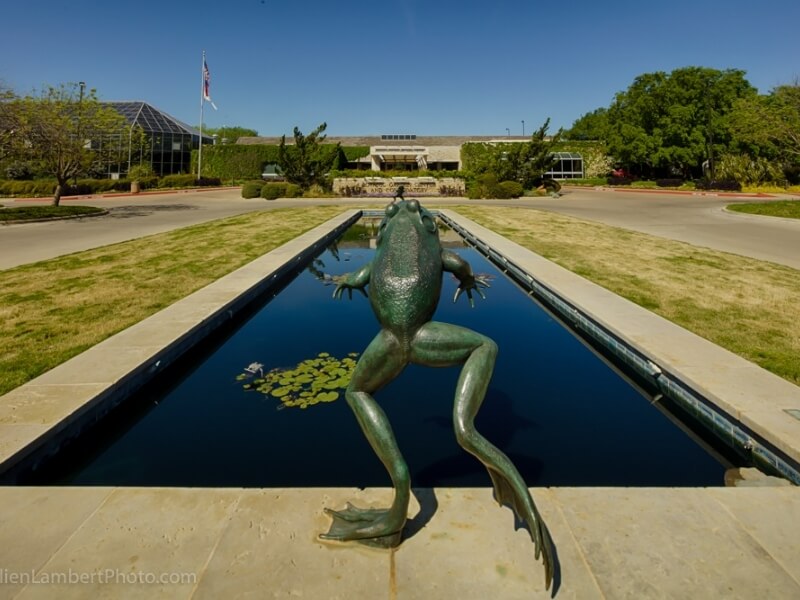
The Fort Worth Botanic Garden is home to the largest collection of the genus Begonia in the Western Hemisphere, comprising more than 1,300 unique taxa. Established in the 1970s, the collection reflects decades of horticultural stewardship, research, and cultivation, guided by successive curators and a dedicated community of knowledgeable volunteers.
The Begonia Species Bank helps prevent the loss of Begonia species worldwide. It serves as a resource for research, conservation, education, and collaboration. The collection is accredited through the Plant Collections Network of the American Public Gardens Association (APGA).
Not everyone who wants to study the collection can visit in person. A scientific photographic database opens the collection to researchers working offsite, to educators and students, and to anyone curious about begonias.
Begonia Collection Curator Glenn Dickerson and Living Collections Director Seth Hamby launched the Begonia Scientific Photography Project in 2023. Their goal is to visually document the entire collection and to later develope a photographic database available for public viewing and study.
Each image is captured at high resolution to clearly show the plant’s botanical anatomy. The photos pay particular attention to the diagnostic features that taxonomists rely on to identify and classify species. The project is led by Living Collections Associate Victor Mozqueda, who specializes in macro photography. Victor has guided multiple cohorts of interns through the photographic process and helped refine a standard protocol that can be applied across the full collection.
The project began with an inventory of every plant in the Begonia Species Bank. As plants come into flower, they are brought to the photo studio. Priority goes to species and to U-numbered plants, which are typically wild-collected begonias that have not yet been formally named and are tracked by a number assigned by the American Begonia Society.
To capture fine detail across the whole plant, the team uses a technique called focus stacking:
- The photographer starts at the point closest to the camera.
- The focus shifts in small increments, called steps, with a photo taken at each one.
- The stack ends when the farthest point is in focus.
- A single stack can include anywhere from 3 to 100 images, which are blended into one fully focused photograph.
Each stack is captured using Helicon Remote, software that connects the camera directly to a computer and automates the shooting process. The images are then blended into a single, fully focused photograph using Helicon Focus.
Before editing begins, Helicon Focus analyzes each stack for quality issues such as plant or camera movement. If the problems are significant, the stack is reshot. Photos that pass this review move on to manual editing, which can take two or more hours per image. Common edits include:
- Cropping and rotating the image
- Adjusting the background to true white or true black
- Removing tripod legs or support needles
- Refining exposure, texture, and clarity to bring out detail
- Reducing haloing and correcting stacking errors caused by variations in brightness
- Comparing against the original source images to correct remaining errors
For select begonias, edited images are also assembled into detailed morphology plates, which arrange and label individual features of the plant in a single composition.
Behind the Scenes
A look inside the photo studio, where staff and interns capture and review each image.
The Finished Photographs
A completely edited set of photos features angles of the top and sides of the subject against both white and black backgrounds. This is done to accommodate traits that are more noticeable when put against a darker or lighter background. For select begonias, the team also creates morphology plates: detailed compositions that isolate and label individual features, from flowers and ovaries to stipules and stems. Selections from these morphology plates and photo sets can be observed below.
-
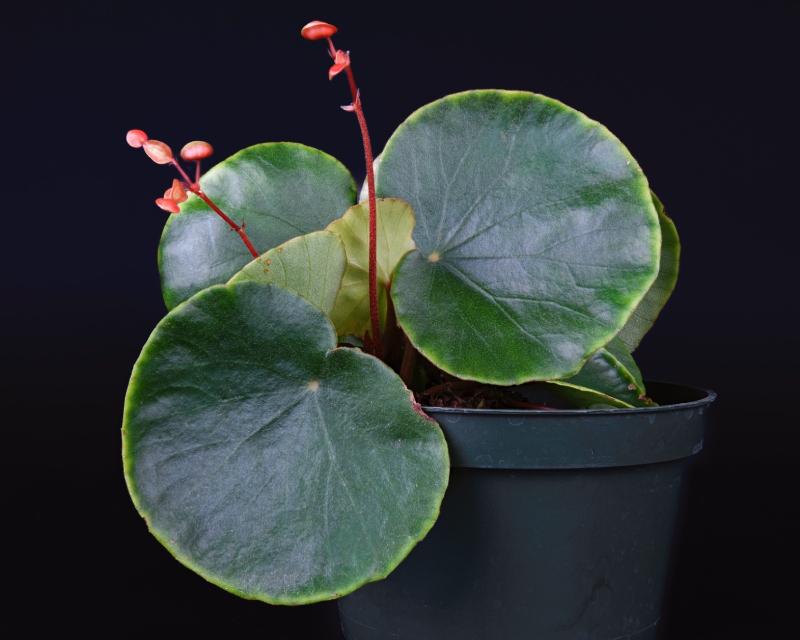
Begonia albococcinea -
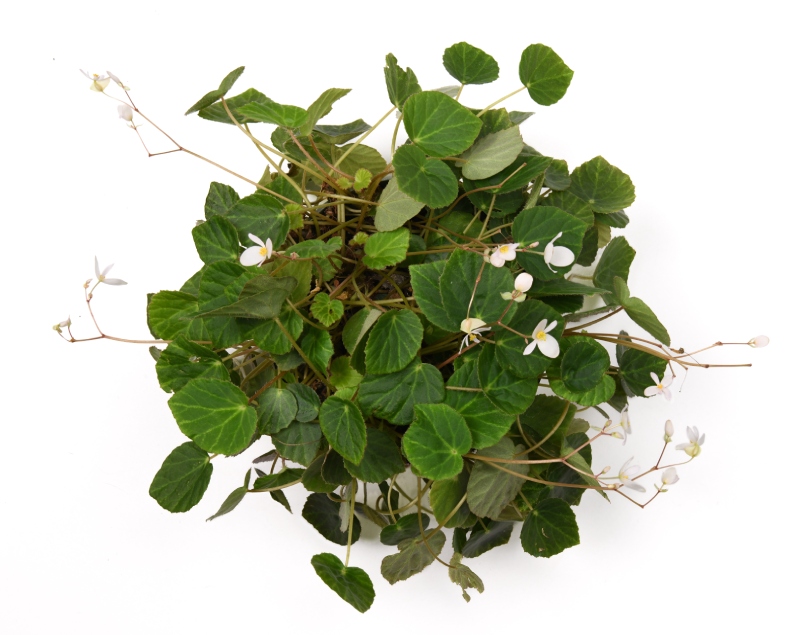
Begonia castilloi -
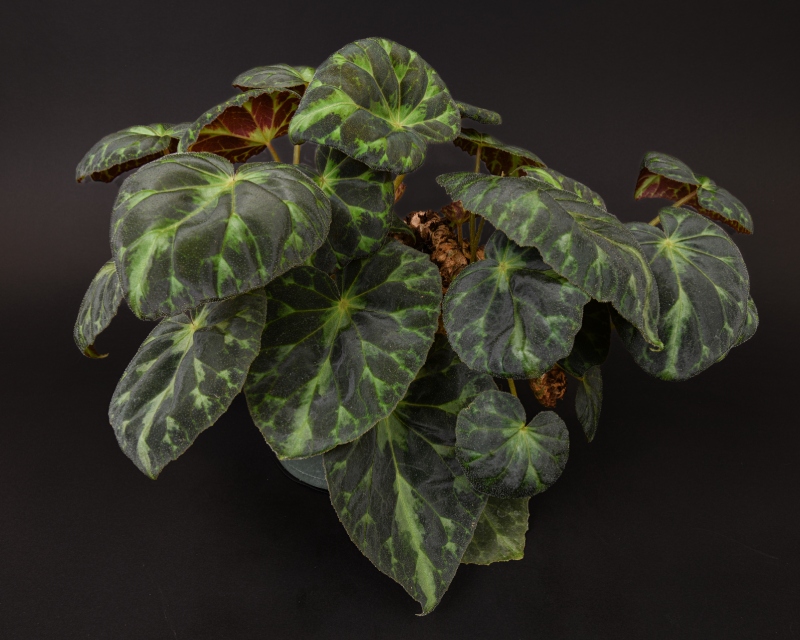
Begonia barsolouxiae -
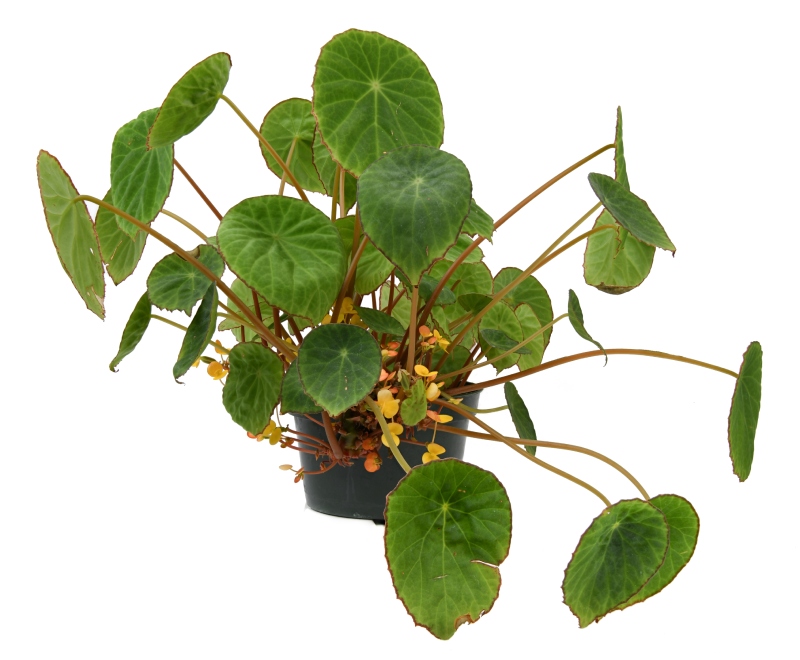
Begonia scapigera -
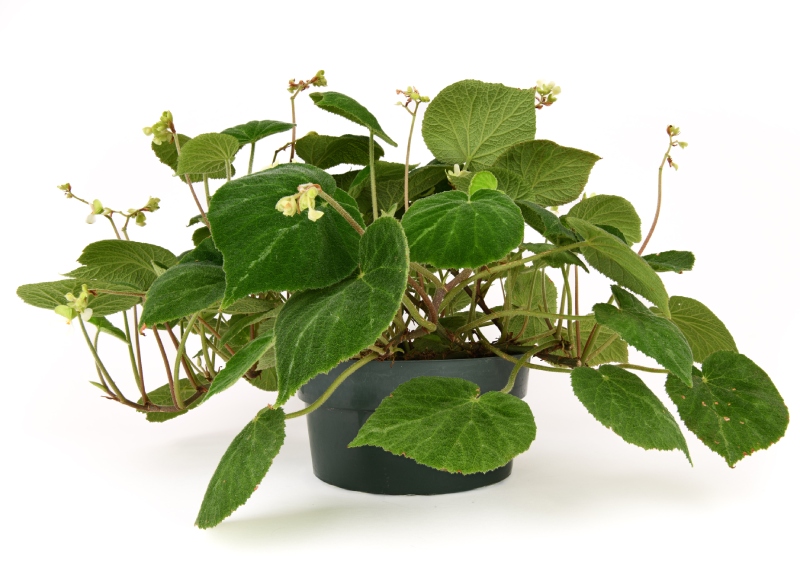
Begonia aliceclarkiae -
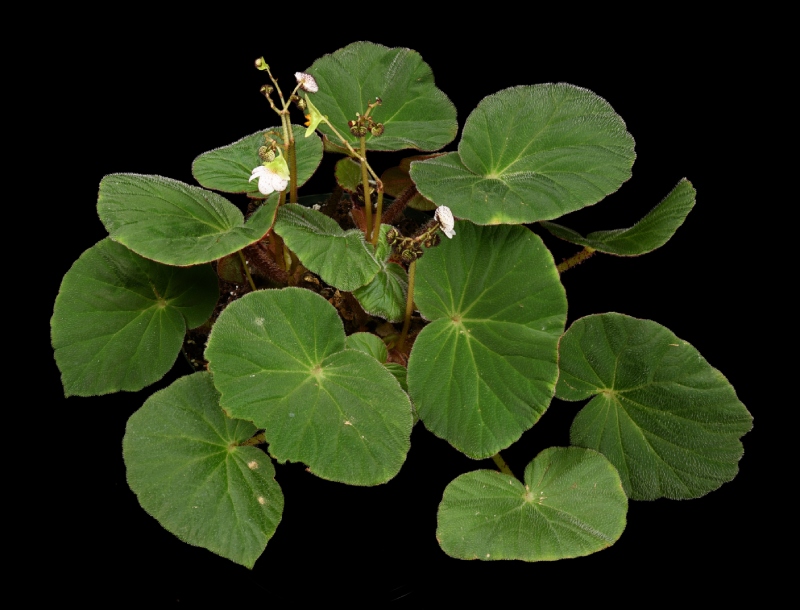
Begonia rubropilosa -
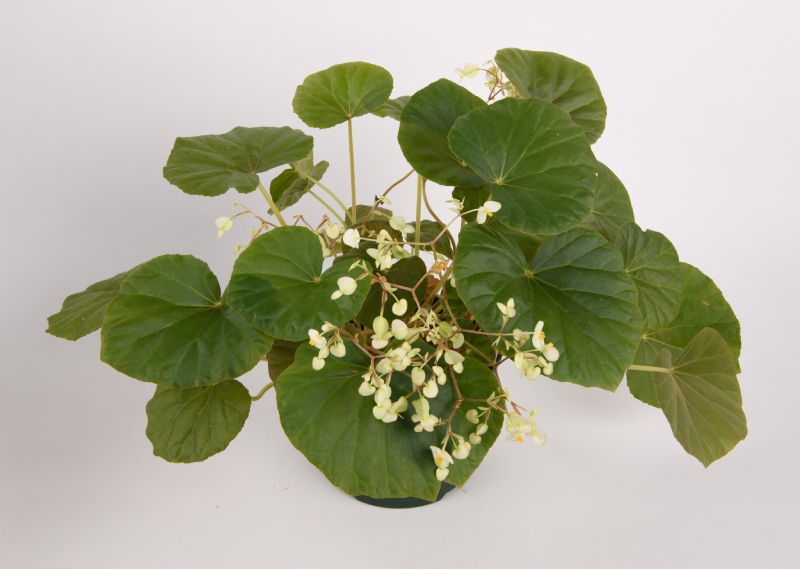
Begonia ankaranesis -
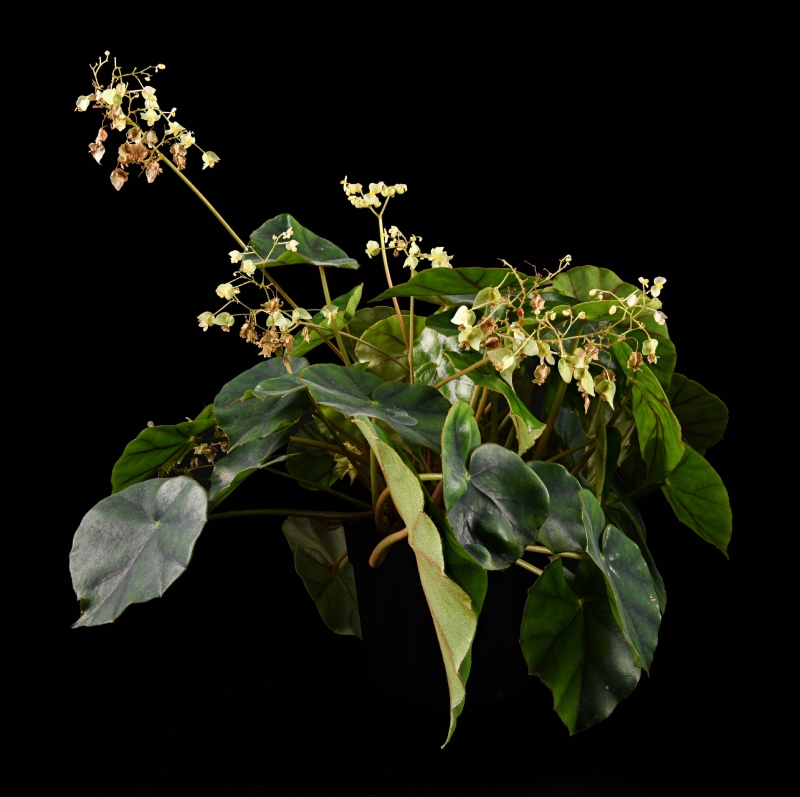
Begonia glandulosa -
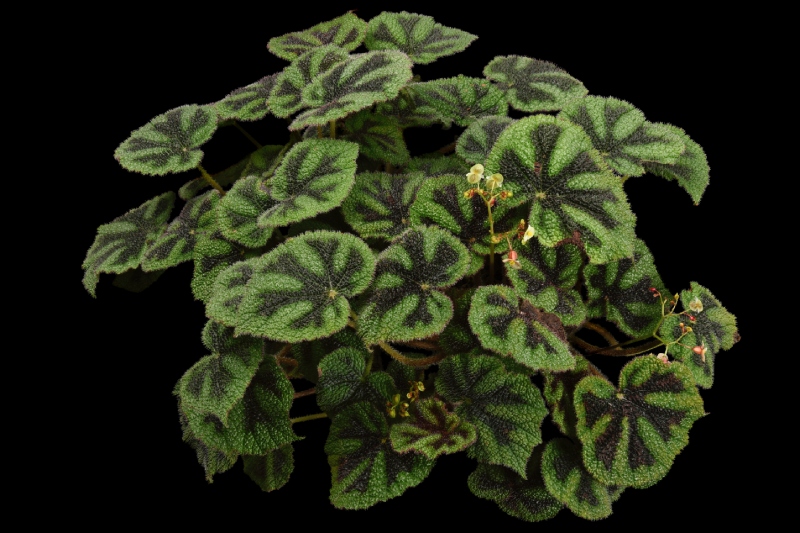
Begonia masoniana -
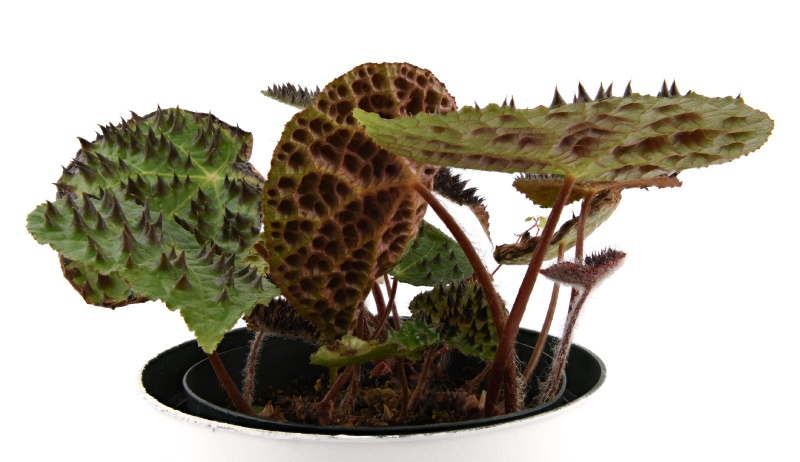
Begonia ferox -
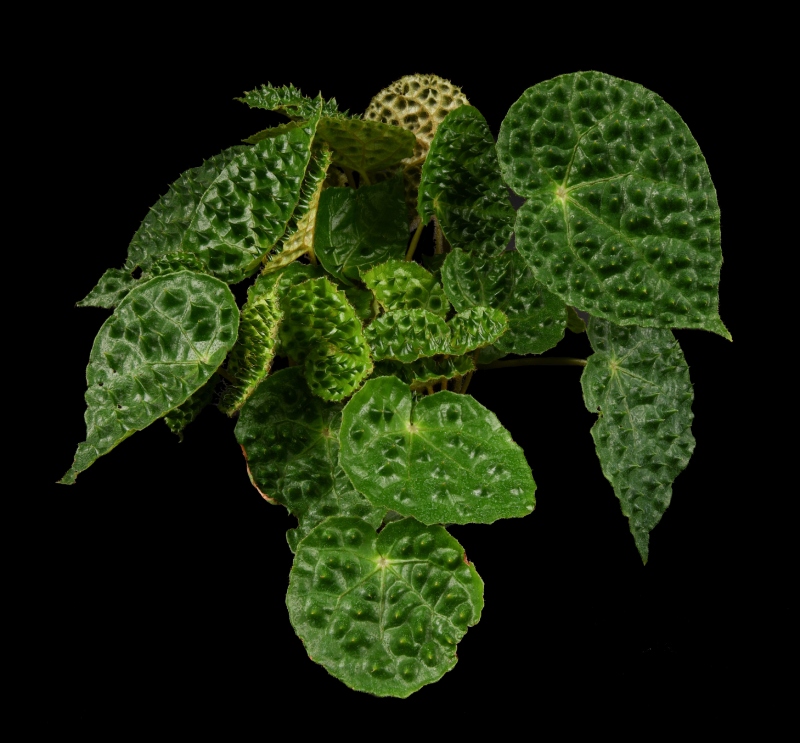
Begonia ferox green form -
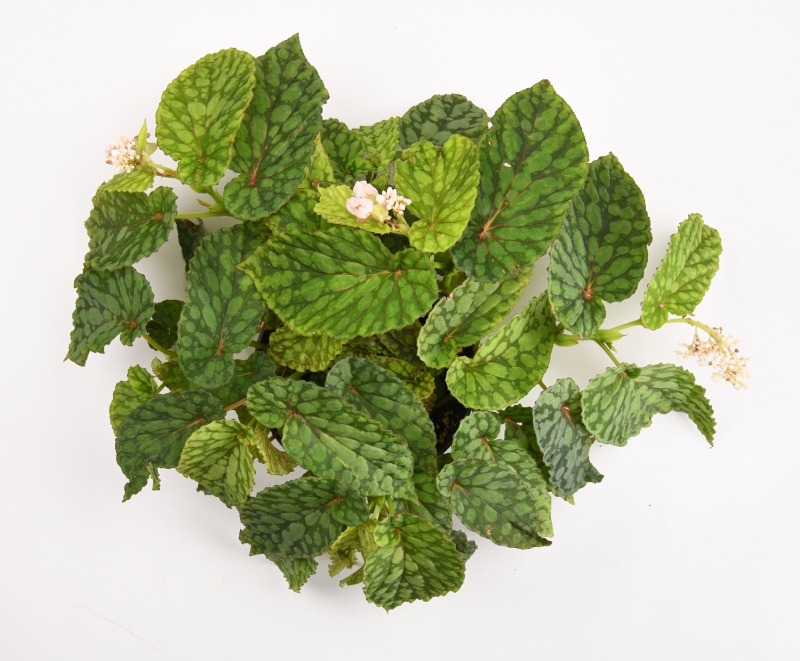
Begonia U038 -
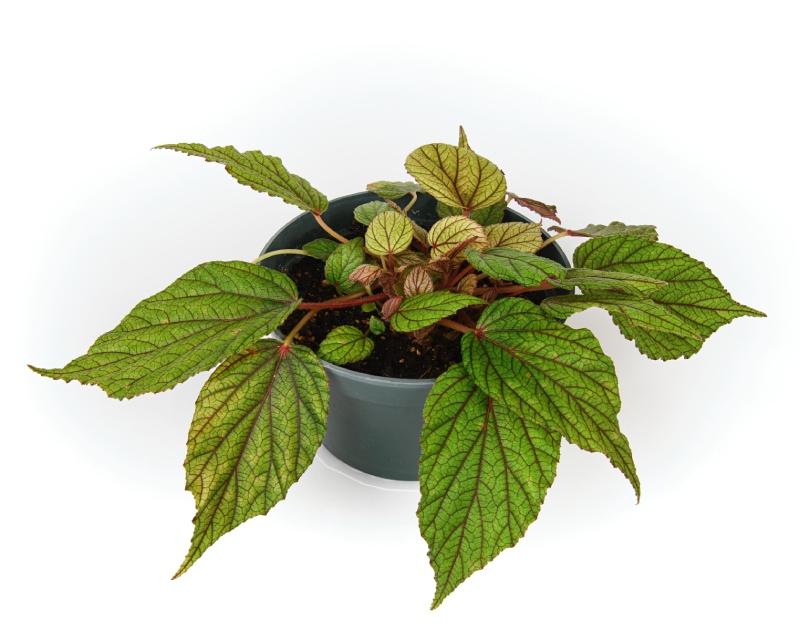
Begonia abdullahpieei -
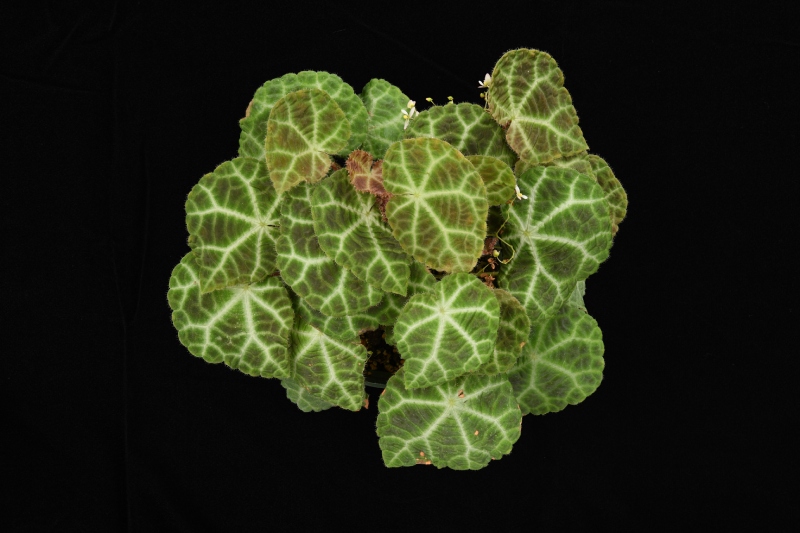
Begonia araneumoides -
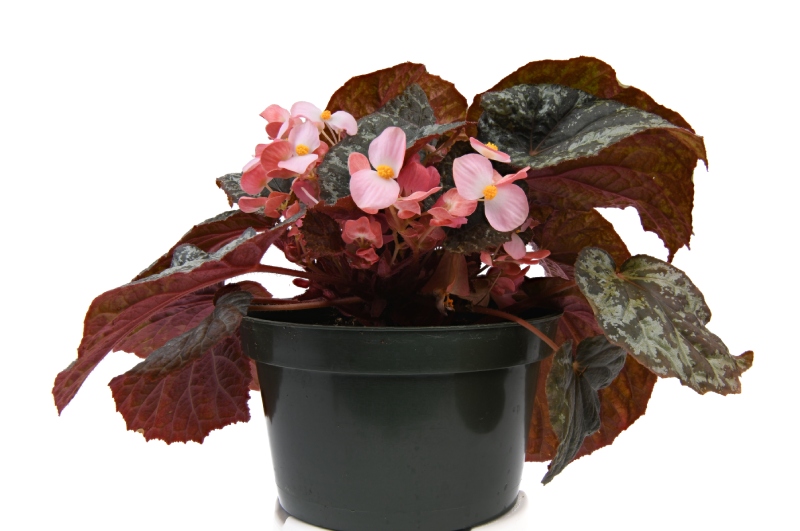
Begonia mendumiae -
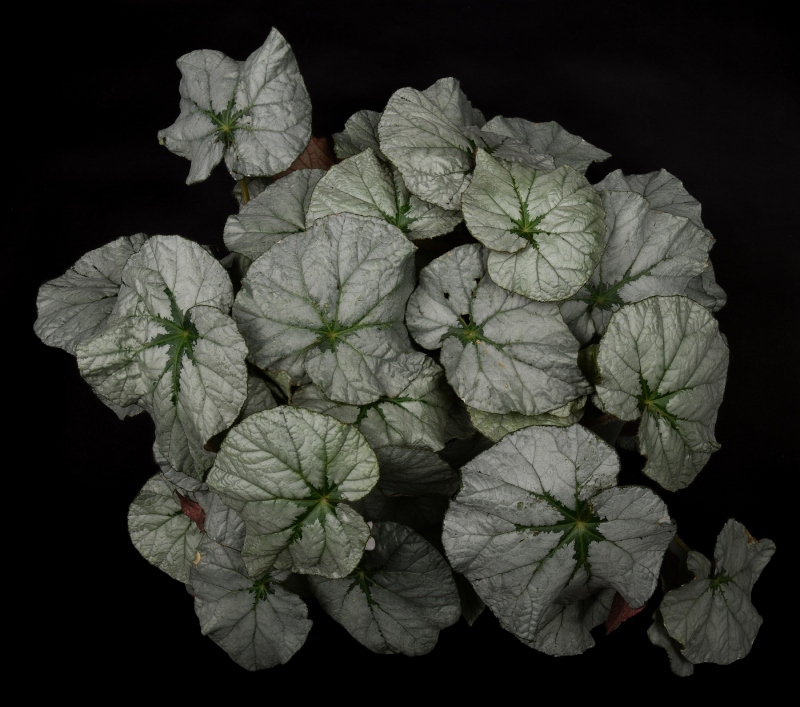
Begonia U489
Lightbox
Project Team
Carousel items
-
Seth Hamby
Living Collections Director
-
Glenn Dickerson
Begonia Collection Curator
-
Victor Mozqueda
Living Collections Associate
-
Brendon McDonald
Begonia Photography Project Intern
-
Abigail Pardue
Begonia Photography Project Intern
-
Anastasia Baron
Begonia Photography Project Intern
Carousel items
-
BRIT Press
Publication is an integral part of the Botanical Research Institute of Texas’ commitment to scientific research by botanists, including BRIT’s own scholars, through distribution of books and journals across the globe.
-
BRIT Library
The BRIT Library supports botanical research and education in Texas and around the world. Our collection has been carefully curated and is a valuable research tool for those studying systematic botany, horticulture, natural history and ethnobotany. The BRIT Library houses one of the largest and finest collections of botanical works in the southwestern United States.
-
BRIT Library
The BRIT Library supports botanical research and education in Texas and around the world. Our collection has been carefully curated and is a valuable research tool for those studying systematic botany, horticulture, natural history and ethnobotany. The BRIT Library houses one of the largest and finest collections of botanical works in the southwestern United States.
-
Journal of the Botanical Research Institute of Texas
J. Bot. Res. Inst. Texas(formerly Sida, Contributions to Botany (“SCB”)) has been a source of current research in classical and modern systematic botany for readers throughout the world for 61 years.
-
Herbarium
The herbarium collections are the core of our institution and support ongoing research projects
No pages found for the selected parent.