Hawaiian Blueberries Traced Back to Northeast Asia in Surprising Discovery
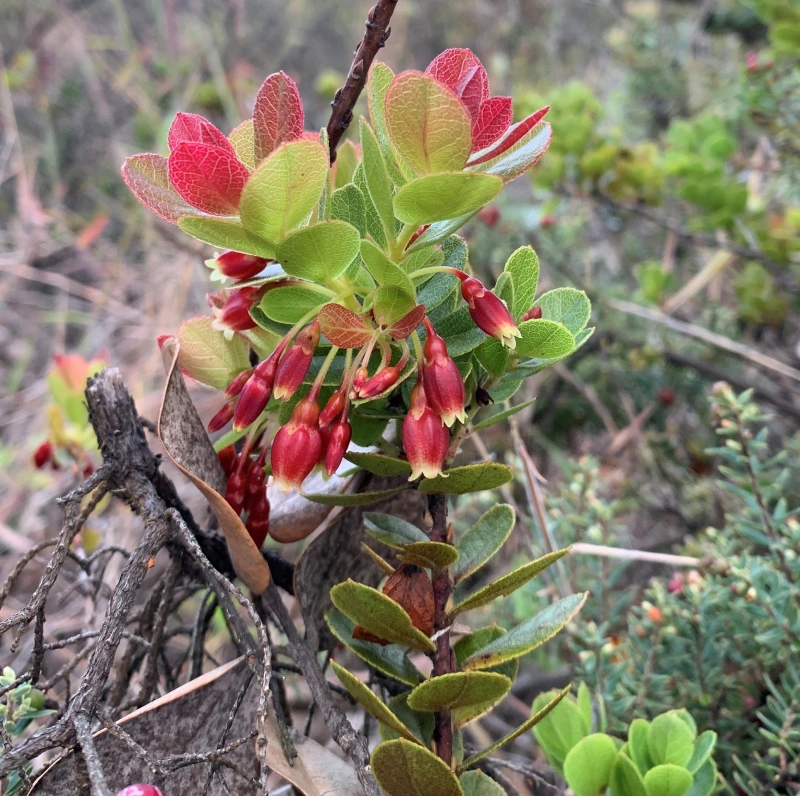
Ohelo Vreticulatum *Photo by Anna Becker
Researchers from the Botanical Research Institute of Texas and the University of Florida crack a long-standing botanical puzzle
Scientists at the Botanical Research Institute of Texas (BRIT) and University of Florida have solved a botanical mystery: Hawaii’s wild blueberries originally came from temperate East Asia, not North America as expected.
The finding, published in the American Journal of Botany, reveals an unusual 4,000-mile journey across the Pacific Ocean that happened about 5–7 million years ago.
Hawaiian blueberries, called ʻōhelo by native Hawaiians, grow on six of Hawaii’s eight main islands. The berries feed native birds and hold deep cultural meaning for Hawaiian communities. The plants show amazing variety in their leaves, flowers, and fruits. Although they are part of the large blueberry group (ca. 1400 species worldwide), the fruits of most ʻōhelo plants are actually red.
Using DNA analysis, the research team compared Hawaiian blueberries with their relatives around the world. The results showed that Hawaii’s blueberries are most closely related to Vaccinium yatabei, a species found only in Japan.
“This is a rare pattern among Hawaii’s native plants,” said Dr. Peter W. Fritsch, co-senior author of the study and research scientist at BRIT. “Only 4% of Hawaiian plants are estimated to have come from temperate East Asia, whereas most arrived from North America or tropical regions.”
The blueberries likely reached Hawaii by hitching a ride with migratory birds that still travel between regions around the North Pacific Ocean and the islands today. Birds most likely ate the berries in the north and carried the seeds across the ocean in their digestive systems.
Hawaiian blueberries are tough survivors. The plants appear to have come to Kauai “pre-adapted” to the wet cold conditions of Hawaii’s high elevations, where they typically grow—their ancestors evolved to survive cold temperate climates. They now often grow on fresh lava flows of the most recent island, Hawaii, where almost no other plants can live.
The story doesn’t end in Hawaii. The research found that Hawaiian blueberries later spread to Southeastern Polynesia, where they mixed with a species from a different part of the blueberry group to create a hybrid species. The DNA evidence even suggests at least one has traveled back to coastal North America—an almost unheard-of reverse journey from islands to continents.
The timing matters. The blueberries arrived around the same time Kauaʻi, Hawaii’s oldest major island, rose from the sea. Getting there early gave them millions of years to spread and adapt before competitors arrived. Field and museum specimen observations, combined with a forthcoming DNA analysis based on populations from all the major islands, suggest 15 to 18 distinct species waiting to be formally recognized, a number much higher than the three currently recognized. This has important implications for the protection and conservation of ʻōhelo.
The research was conducted with support from the National Science Foundation, Botanical Society of America, American Society of Plant Taxonomists, Explorer’s Club, and the American Philosophical Society.
Learn more about Dr. Peter W. Fritsch’s research by listening to his interview on The Conversation aired on Hawai’i Public Radio.
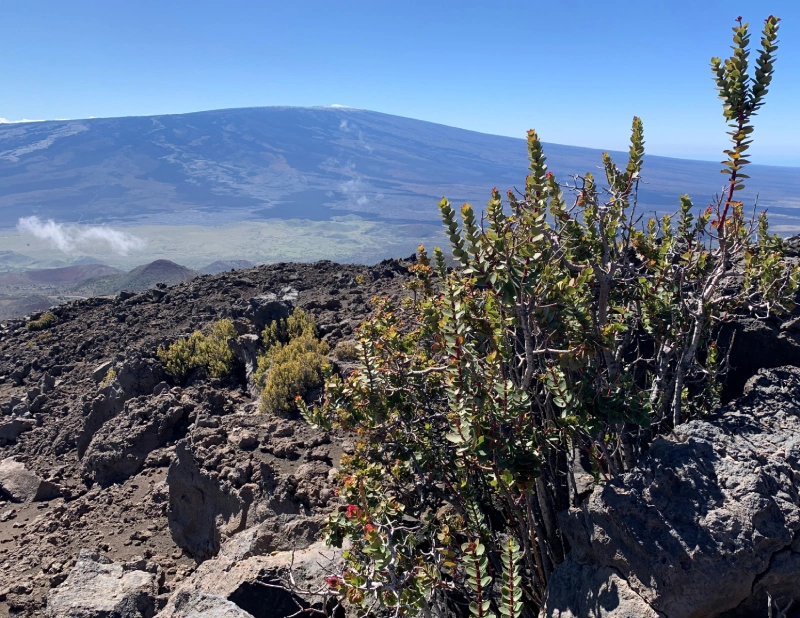
Ohelo New Mauna Kea Looking Toward Mauna Loa *Photo by Anna Becker
About BRIT and the Fort Worth Botanic Garden
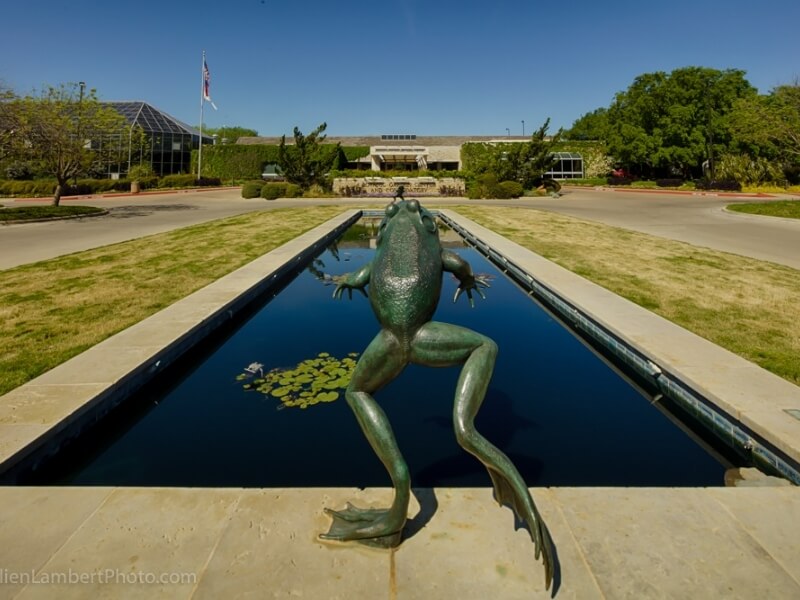
In partnership with the Botanical Research Institute of Texas (BRIT), the Fort Worth Botanic Garden is dedicated to advancing plant science and conservation. As an internationally recognized center for research and education, BRIT drives conservation efforts that highlight the essential role plants play in our environment, inspiring our community to protect and value the natural world. The BRIT Philecology Herbarium contains nearly 1.5 million plant specimens from around the world making it one of the largest herbaria in the United States, and the BRIT Research Library houses nearly 125,000 volumes of botanical books and journals. The BRIT Press publishes botanical-related books and the esteemed, peer-reviewed journal JBRIT.
Dedicated to connecting people with nature, Fort Worth Botanic Garden serves as a living museum, educational institution, and cultural landmark for the community. FWBG is the oldest public botanic garden in Texas with beautiful theme gardens, including the Rose Garden and Japanese Garden, the Adelaide Polk Fuller Garden featuring a comprehensive collection of trees, shrubs, and perennials, and the Victor and Cleyone Tinsley Garden, highlighting plants native to north central Texas.