BRIT scientists work in the field and in the lab to uncover the mysteries of the tiny but mighty dwarf pipewort
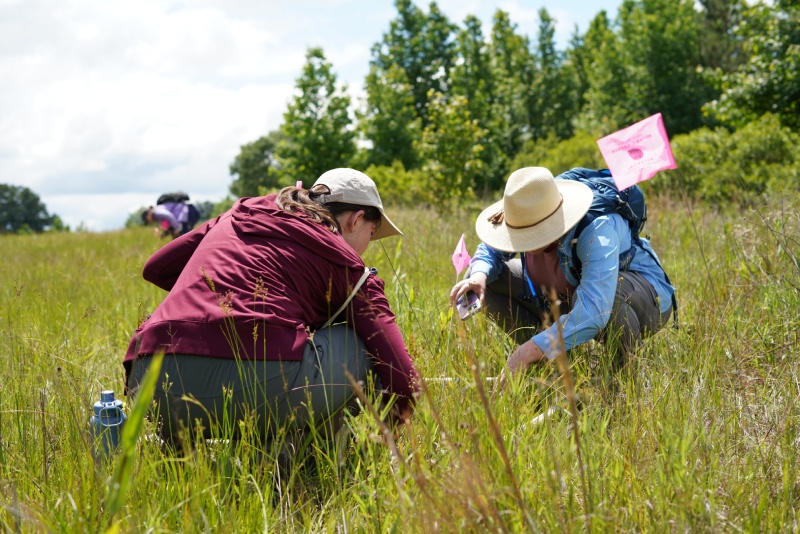
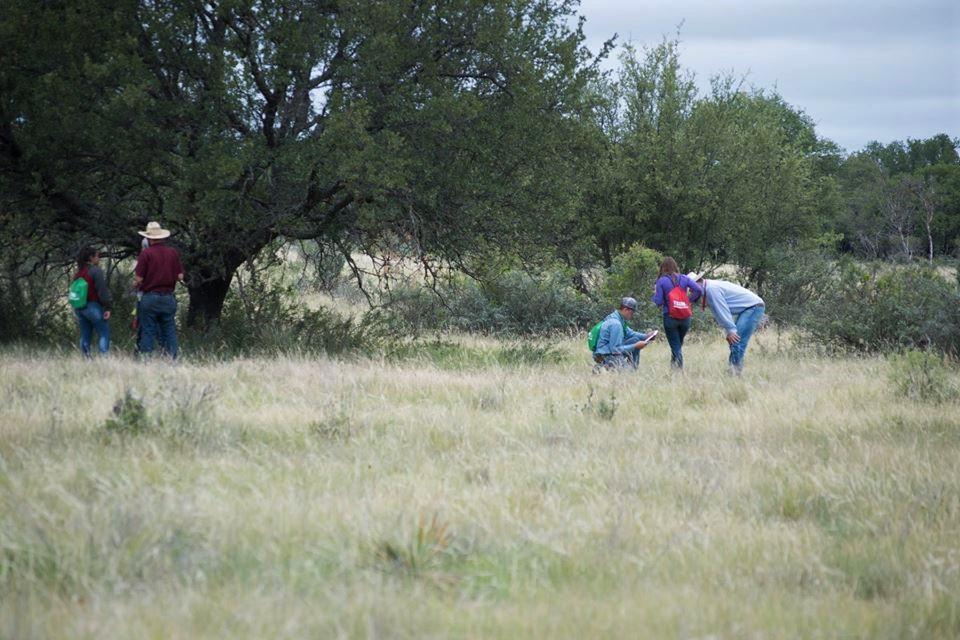
In the field and in the lab, BRIT researchers are uncovering the secrets of a very small but very special plant: Eriocaulon koernickianum, or dwarf pipewort.
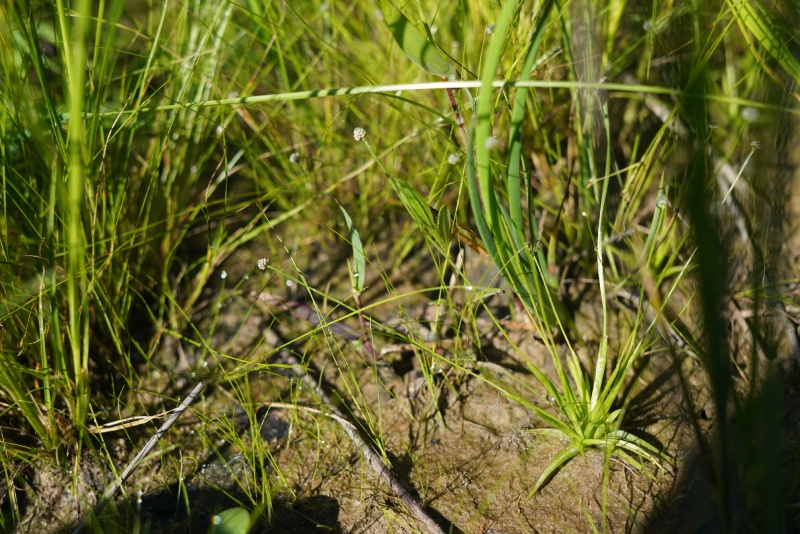
“It’s a tiny little plant that reaches only an inch or two tall,” says Conservation Botanist Kay Hankins. “It’s not the most showy plant, and so it doesn’t receive a lot of love. But it’s absolutely fascinating!”
What is dwarf pipewort?
- An herb that is native to the southern United States.
- Member of a plant family commonly known as “bog buttons.”
- Grows in isolated populations, primarily along the sandy edges of bogs and other ephemeral wetland habitats with periodic seasonal flooding.
- Blooms by forming an inconspicuous gray ball of flowers that reaches 3 to 4 mm in width—just a bit smaller than a grain of short-grain rice.
- Is considered at considerable risk of extinction due to habitat loss.
What do scientists want to know?
This tiny plant prompts some big questions! For one thing, its distribution across the U.S. is just weird. The plant is found in Texas, Oklahoma, and Arkansas—and in the piedmont of Georgia. “There are 700 kilometers between the populations in Georgia and their nearest neighboring populations in Arkansas,” says Hankins. “What is that about?”
For another thing, the plant lives in two completely different types of habitats. “Primarily, dwarf pipewort grows in the sandy ephemeral wetland habitats found along the periphery of bogs—areas which experience periodic seasonal flooding. However, in Central Texas, this plant only occurs within granitic depressions in the exposed bedrock, which become shallow pools when filled with rainwater,” says Hankins. “So, this species occupies two completely distinct ephemeral wetland habitats just in Texas alone, which is super interesting!”
About those baby photos…
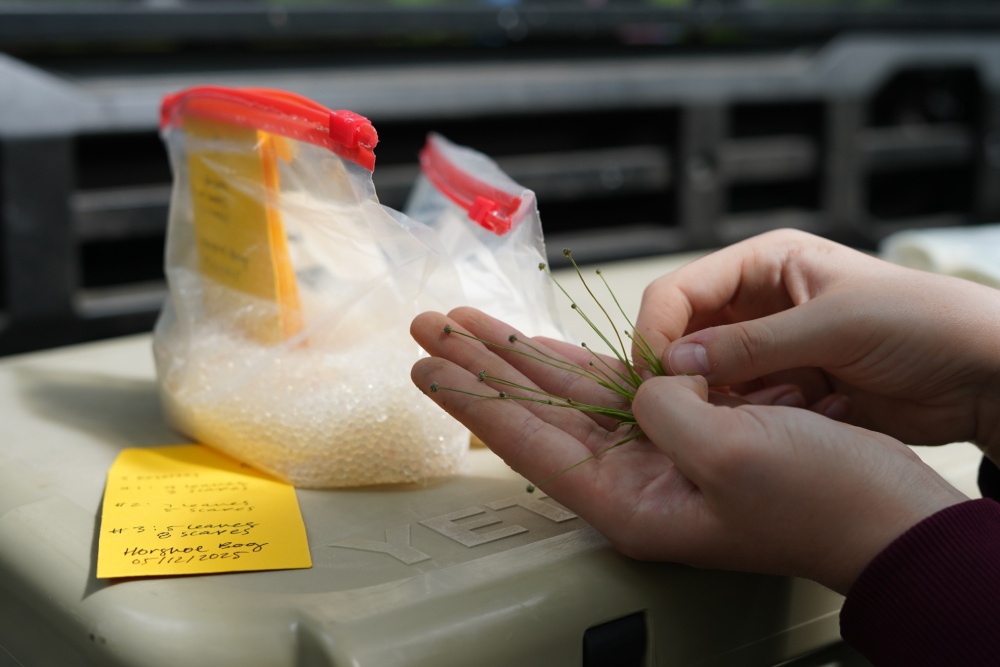
As well as studying the plant in the field, BRIT botanists have been trying for several years to convince Eriocaulon koernickianum to germinate in the lab. This would not only help contribute to our understanding of this species, its biology, and dormancy requirements, but also give scientists more plants to work with in support of ongoing conservation projects and future re-introduction efforts.
It hasn’t been easy. The seeds are only half a millimeter long, roughly the length of a flea, so they’re extremely small and challenging to work with. Not only that, but this species has very particular germination requirements which, until recently, have only been vaguely understood.
A preliminary germination trial conducted at BRIT back in 2023 was unsuccessful in coaxing these seeds to germinate. Finally, last month, our scientists cracked the code and produced multiple germinates.
“I was with Brooke Best at the Center for Plant Conservation conference listening to one of the talks when we received the photos of the first germinate from Seed Bank technician Natch Azure,” says Hankins. “We were so excited—we went around showing all of our colleagues like proud parents.”
What’s next?
Botanists have lots of questions about Eriocaulon koernickianum—some of which they hope to answer through population genetic analysis.
“Previous research found that all of the populations were genetically identical,” says Hankins. “But that research was done in the early 1990s, and there have been some significant advances in the field since then. Perhaps now we might be able to find distinct genetic differences between populations that could not be detected when these previous studies were conducted.”
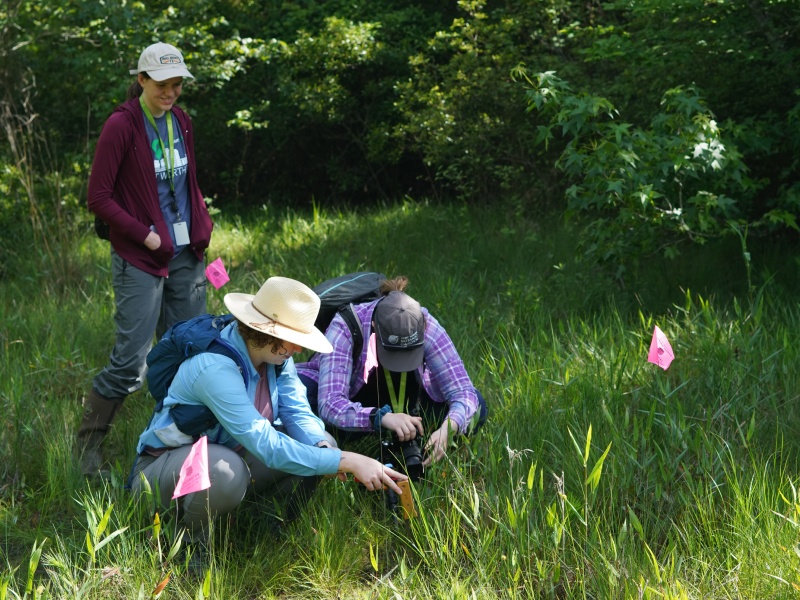
Someday, the BRIT team hopes to collaborate with partners across the Southeastern U.S. to examine samples collected from each of the known populations of dwarf pipewort in Texas, Oklahoma, Arkansas, and Georgia—to better understand this species, its unique evolutionary and natural history, and how to better conserve its genetic diversity across the entirety of the species range. They also hope to learn more about the long-term trends in the species’ populations and its distribution to help better quantify its risk of extinction.
Why work so hard for this tiny plant?
Some people might ask why scientists would spend so much effort trying to understand this less-than-charismatic little herb.
“I recognize that perhaps it’s a bit easier for me to acknowledge the innate value of the organisms we’re trying to conserve,” says Hankins. “Still, the fact that they’re alive and native to this beautiful state that we all call home makes them special! We should cherish these species if for no other reason than just the fact that they are a small, peculiar part of this state’s amazing natural history.”
At the same time, Hankins emphasizes that so little is known about Eriocaulon koernickianum that we have no idea what role the plant plays in its ecosystem or the potential consequences if it were to vanish. “There could be potentially massive negative cascading impacts throughout an entire ecosystem if even a single plant goes extinct in the wild,” says Hankins. “The fact is, we simply do not know what ecosystem services this plant might provide, or what other organisms may depend on it to survive and thrive, but we’ll never know if it disappears from the wild before we’ve even had that chance to find out.”
“That’s why we care so much,” Hankins concludes.
About BRIT and the Fort Worth Botanic Garden
In partnership with the Botanical Research Institute of Texas (BRIT), the Fort Worth Botanic Garden is dedicated to advancing plant science and conservation. As an internationally recognized center for research and education, BRIT drives conservation efforts that highlight the essential role plants play in our environment, inspiring our community to protect and value the natural world. The BRIT Philecology Herbarium contains nearly 1.5 million plant specimens from around the world making it one of the largest herbaria in the United States, and the BRIT Research Library houses nearly 125,000 volumes of botanical books and journals. The BRIT Press publishes botanical-related books and the esteemed, peer-reviewed journal JBRIT.
Dedicated to connecting people with nature, Fort Worth Botanic Garden serves as a living museum, educational institution, and cultural landmark for the community. FWBG is the oldest public botanic garden in Texas with beautiful theme gardens, including the Rose Garden and Japanese Garden, the Adelaide Polk Fuller Garden featuring a comprehensive collection of trees, shrubs, and perennials, and the Victor and Cleyone Tinsley Garden, highlighting plants native to north central Texas.